Hantavirus outbreak 2026: live cases, world map, daily news
hantavirus.one tracks the 2026 hantavirus outbreak in real time. The page above this summary shows the current case map, the country table, and the latest news from major outlets. Below: a short reference covering what hantavirus is, the role of Andes virus, the MV Hondius cluster, symptoms, prevention, and the WHO and ECDC framing of the event. Every number and claim links to its primary source.
What is hantavirus?
Hantaviruses (genus Orthohantavirus, family Hantaviridae) are rodent-borne RNA viruses found on every inhabited continent. The CDC groups hantavirus illness into two clinical syndromes: hemorrhagic fever with renal syndrome (HFRS), reported mainly in Europe and Asia, and hantavirus pulmonary syndrome (HPS), reported in the Americas. Most people who become ill have inhaled aerosolized particles from rodent urine, droppings, or saliva, typically after disturbing dust in an enclosed space (CDC, 2024). For a deeper reference, see what is hantavirus.
Andes virus is the only hantavirus that spreads between people
Andes virus (ANDV) is the single hantavirus with documented human-to-human transmission. The WHO describes ANDV person-to-person spread as rare and limited to close, sustained contact, such as household members or healthcare workers without personal protective equipment. The most carefully documented cluster of ANDV human-to-human spread happened in Argentina in 2014. That property is what makes the 2026 MV Hondius cluster epidemiologically distinct from other hantavirus events. See Andes virus for full background.
The MV Hondius cruise-ship cluster started on 1 April 2026
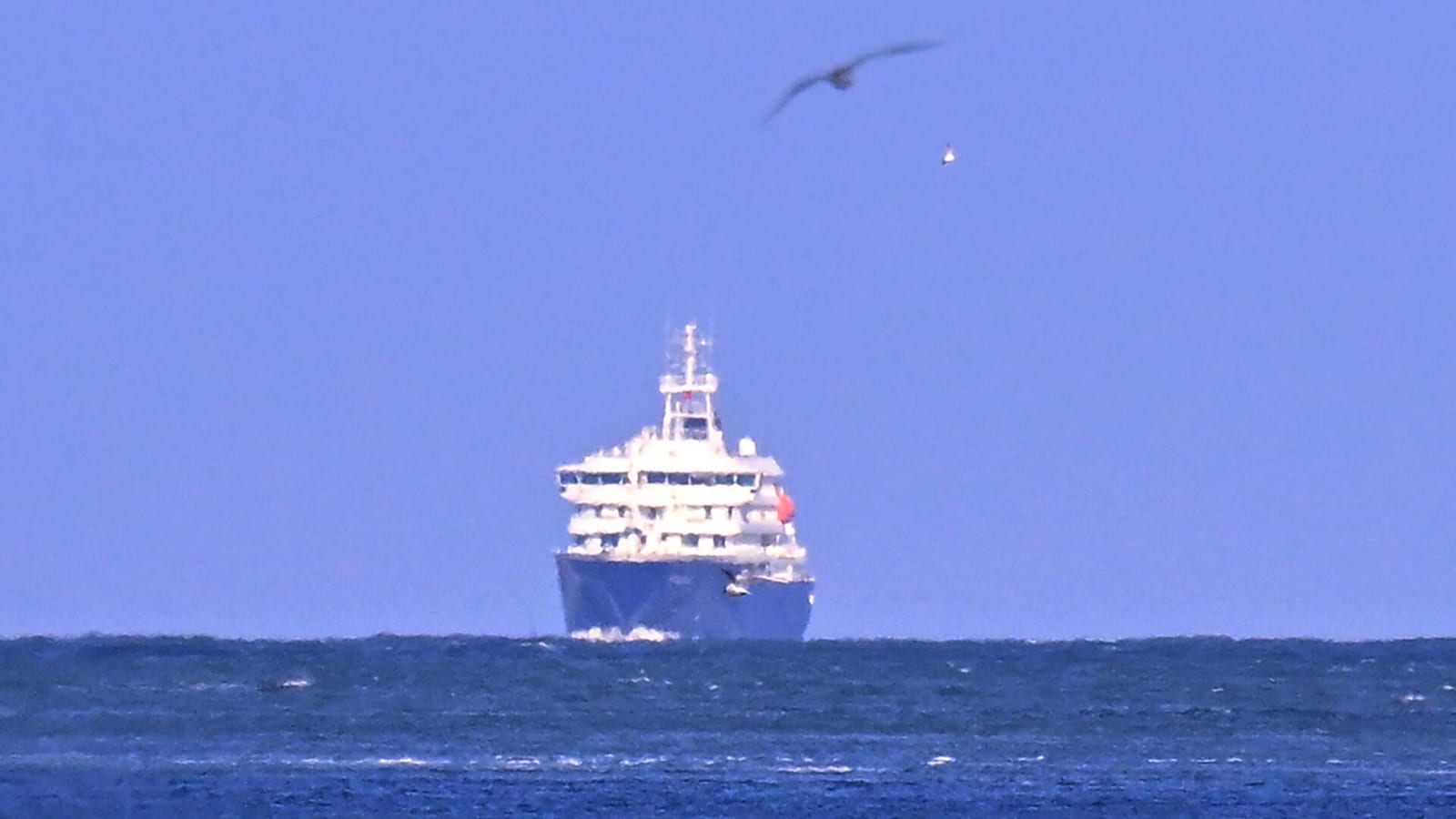
MV Hondius is a Dutch-flagged Polar Class 6 expedition cruise ship operated by Oceanwide Expeditions. MV Hondius left Ushuaia, Argentina on 1 April 2026 with 147 people on board (88 passengers and 59 crew across 23 nationalities). The first symptom-onset on the MV Hondius was 6 April, six days into the voyage. The first MV Hondius death occurred on 11 April and was initially attributed to natural causes. The WHO received an official cluster report on 2 May and published Disease Outbreak News 2026-DON599 on 4 May. WHO published an updated Disease Outbreak News 2026-DON600 on 8 May, confirming 6 laboratory-confirmed Andes virus cases across 14 countries. The WHO has deployed an expert aboard the ship and arranged shipment of 2,500 diagnostic kits from Argentina to laboratories in five countries. On 7 May, the US CDC activated its Emergency Operations Center at Level 3, the lowest of three activation tiers, and dispatched teams to the Canary Islands and to the National Quarantine Unit at the University of Nebraska Medical Center to receive approximately 17 Americans from the ship. WHO Director-General Tedros Adhanom Ghebreyesus traveled to Tenerife on 9 May to oversee the evacuation, publishing a direct message to island residents confirming the risk to daily life in Tenerife is low (WHO, 9 May).
MV Hondius arrived at the port of Granadilla de Abona, Tenerife, in the early hours of 10 May 2026; evacuation began the same morning with Spanish nationals disembarking first. The first repatriation flight departed Tenerife for Madrid on 10 May, carrying 13 Spanish passengers and 1 Spanish crew member to quarantine at Hospital Central de la Defensa (Al Jazeera, 10 May). By the end of Day 1, 94 people of 19 nationalities had disembarked; 18 evacuees (17 US nationals and one British US resident) departed on a CDC/HHS charter to the National Quarantine Unit at the University of Nebraska Medical Center. During the French repatriation flight, one of five returning French nationals began showing symptoms; French Prime Minister Sébastien Lecornu announced all five were placed in strict isolation and transferred to Bichat Hospital, Paris, for 72-hour hospitalisation followed by 45-day home quarantine (BBC News, 10 May). MV Hondius subsequently departed Tenerife with a skeleton crew of approximately 30 and a Dutch nurse, carrying the body of a passenger who died on board, bound for Rotterdam for full disinfection.
On 11 May, one of 17 American evacuees transported to Nebraska Medicine's National Quarantine Unit at the University of Nebraska Medical Center tested mildly positive for Andes virus; a second evacuee showed mild symptoms; both had been transported in aircraft biocontainment units (HHS/CDC via ABC News, 11 May). Also on 11 May, French Health Minister Stéphanie Rist confirmed that the French evacuee who had shown symptoms on the repatriation flight tested positive for hantavirus; four other French evacuees tested negative; French authorities traced 22 contact cases on flights (France 24, 11 May). Later the same day, two American evacuees were transferred from Nebraska Medicine's National Quarantine Unit to Emory University Hospital's Serious Communicable Diseases Unit in Atlanta — one symptomatic individual placed in the biocontainment unit and one asymptomatic close contact under evaluation (CBS News, 11 May). MV Hondius departed Granadilla de Abona for Rotterdam on the evening of 11 May with a 25-strong skeleton crew (17 Filipino, 4 Dutch including 2 medical staff, 4 Ukrainian, 1 Russian, 1 Polish), expected to arrive on 17 May for full disinfection per Oceanwide Expeditions (RTÉ, 11 May).
On 12 May, WHO Director-General Tedros Adhanom Ghebreyesus and Spain's Prime Minister Pedro Sánchez held a joint press conference in Madrid declaring the MV Hondius evacuation "a success"; WHO updated the global tally to 11 cases (9 laboratory-confirmed and 2 suspected) and 3 deaths, including a newly confirmed Spanish national evacuated to Hospital Central de la Defensa Gómez Ulla in Madrid; Tedros warned that more cases may arise during the up to six-week incubation window (RTÉ, 12 May). Also on 12 May, Radboudumc university medical centre in Nijmegen placed 12 hospital staff in six-week precautionary quarantine after they handled blood and urine samples from an MV Hondius hantavirus patient using standard procedures rather than the stricter infection-control protocol required for hantavirus; hospital board chair Bertine Lahuis said the hospital "will carefully investigate the course of events" and that the infection risk to staff remained very low (Radboudumc via Irish Times, 12 May). Late on 12 May, Dr. Xavier Lescure, infectious disease specialist at Bichat Hospital Paris, announced that the confirmed French patient — a woman in her 60s with asthma and other comorbidities — is critically ill with life-threatening lung and heart problems and has been placed on extracorporeal membrane oxygenation (ECMO), what he called "the final stage of supportive care" (Associated Press via South China Morning Post, 12 May).
On 13 May, the Italian Health Ministry confirmed that all four people in Italy placed under hantavirus observation — a Calabrian man on the 25 April KLM flight with the deceased Dutch passenger, an Argentine tourist who arrived from endemic regions on 30 April, and two British tourists in Milan as precautionary cases — had tested negative; the ministry restated that the risk in Europe and in Italy remains very low (Italian Health Ministry via Reuters, 13 May). Later on 13 May, WHO published Disease Outbreak News 2026-DON601, reporting 11 cases (8 laboratory-confirmed, 2 probable and 1 inconclusive) and 3 deaths; the inconclusive case is Dr. Stephen Kornfeld, a 69-year-old retired oncologist from Bend, Oregon, who helped care for ill passengers on board MV Hondius — his confirmatory PCR on arrival in Nebraska returned negative and he has been moved out of Nebraska Medicine's biocontainment unit, with blood test results pending (WHO DON 601 and CNN, 13 May). The same day, the UKHSA confirmed six MV Hondius evacuees had left Arrowe Park Hospital on the Wirral to self-isolate at home following negative PCR results, and announced plans to repatriate 10 contacts from Saint Helena and Ascension Island to the UK as a precautionary measure (UKHSA, 13 May). The full outbreak page carries the day-by-day timeline.
Hantavirus 2026 cases by country (as of 22 Sep)
On 25 May 2026, Spain's Ministry of Health confirmed a second Spanish hantavirus case linked to MV Hondius. The patient is a Spanish national already in preventive quarantine at Hospital Central de la Defensa Gómez Ulla in Madrid, a close contact of the initial outbreak under medical supervision, who tested positive during routine PCR testing. Twelve other Spanish evacuees remain in quarantine, and health authorities said the case does not raise the risk to the general public (Spain Ministry of Health via Euronews, 25 May). The ECDC folded the case into its 26 May daily update, reaching 11 laboratory-confirmed and 2 probable (13 total) with 3 deaths and EU/EEA risk still very low; its earlier 24 May daily had tabulated 12 and predated this national-authority announcement (ECDC, 26 May). On 27 May, WHO Director-General Tedros Adhanom Ghebreyesus reaffirmed the cluster total at 13 cases with 3 deaths and none since 2 May, describing the situation as stable (WHO via Reuters, 27 May). On 28 May, WHO published Disease Outbreak News 2026-DON604 — the fourth update on the cluster — confirming 13 cases (11 laboratory-confirmed and 2 probable) and 3 deaths (2 confirmed and 1 probable), with case fatality ratio 23%; three additional confirmed cases since DON 601 (Canada, the Netherlands and Spain) and the inconclusive US case removed after PCR-negative confirmation. As of 22 May more than 600 contacts (53% high-risk, 47% low-risk) have been identified across 32 countries, territories and areas, and WHO estimates the effective reproduction number at 0.7, indicating declining transmission; WHO reaffirms public-health risk as moderate for those who were on board and low at the global level (WHO DON 604, 28 May). Separately, the US Department of Health and Human Services has published a narrow Public Readiness and Emergency Preparedness Act declaration for Andes virus medical countermeasures — limited to favipiravir, voluntary administration, possible exposure to Andes virus, and a window ending 18 July 2026 — granting liability protection to covered manufacturers, distributors, programme planners and qualified personnel (HHS via Federal Register doc 2026-10539, 27 May).
As of 22 Sep 2026, the hantavirus cluster linked to MV Hondius, which the WHO declared over on 2 July 2026, stands at 12 laboratory-confirmed Andes virus cases and 1 probable (13 in total), with 3 deaths (2 confirmed and 1 probable); 16 countries are connected to the cluster through cases, contacts, or origin investigation. On 10 June, UKHSA laboratories confirmed a positive hantavirus result for the British national on Tristan da Cunha — previously a WHO probable case — reclassifying it as laboratory-confirmed; UKHSA stressed this confirms an existing case rather than a new infection, and the ECDC carried the change into its 11 June daily update, reaching 12 laboratory-confirmed and 1 probable (13 total) with EU/EEA risk still very low (UKHSA, 10 June; ECDC, 11 June). On 22 May 2026, WHO Director-General Tedros Adhanom Ghebreyesus said the outbreak is stabilising, with no deaths since 2 May, and confirmed a 12th case: a Dutch crew member of MV Hondius who tested positive while in quarantine in the Netherlands. The Netherlands' RIVM, which confirmed the case with Erasmus MC through weekly testing of quarantined people, said the patient was hospitalised in isolation as a precaution, the GGD is tracing contacts, and the risk of further spread in the Netherlands remains very small (RIVM and WHO via Al Jazeera, 22 May). The ECDC's 22 May daily update, published earlier that day, still tabulated 11 cases (9 confirmed and 2 probable) and had not yet folded in the Dutch crew-member case; its 24 May daily update then carried the Dutch case, taking the EU/EEA-facing tally to 10 laboratory-confirmed and 2 probable (12 total); the second Spanish case later lifted that to 11 laboratory-confirmed and 2 probable (13 total) on 26 May, with the risk to the EU/EEA general population still very low (ECDC, 24–26 May). Before the Dutch case, the most recent change had been Canada's: the Public Health Agency of Canada's National Microbiology Laboratory confirmed a passenger isolating in British Columbia on 17 May, and WHO had lowered its tally to 10 at a 15 May briefing after the United States confirmed its previously inconclusive case negative (WHO via Al Jazeera, 15 May).
The earlier figure of 11 came from WHO Disease Outbreak News 2026-DON601 (13 May 2026), which itself superseded DON 600 (8 May 2026, 8 cases including 6 laboratory-confirmed and 2 probable): two additional confirmed cases (France and Spain) were reported among passengers after DON 600, and the one inconclusive US case carried in DON 601 was subsequently confirmed negative. DON 604 (28 May) superseded DON 601, reaffirming public-health risk as moderate for those who were on board the cruise ship and as low at the global level. WHO Disease Outbreak News 2026-DON611 (2 July 2026) is the final and current canonical publication: it declared the outbreak over, reporting that the cluster closed at 13 cases and 3 deaths with no further cases since 25 May, and that the ANDV outbreak associated with MV Hondius "no longer poses a public health risk and no further related transmission is expected" (WHO DON 611, 2 July).
Spain became a country with a confirmed case after a Spanish national evacuated to Hospital Central de la Defensa Gómez Ulla in Madrid tested positive for hantavirus and began showing compatible symptoms in the early hours of 12 May (Spain Health Minister Mónica García, 11 May provisional → 12 May confirmed via Euronews; included in the WHO Madrid press conference tally of 9 laboratory-confirmed cases on 12 May, then in WHO DON 601 on 13 May). A second Spanish national, a close contact already isolated at Gómez Ulla, tested positive on routine PCR testing on 25 May, taking Spain to two laboratory-confirmed cases (Spain Ministry of Health via Euronews, 25 May). France had been added as a confirmed case the previous day after French Health Minister Stéphanie Rist confirmed a French evacuee tested positive (11 May); the patient — a woman in her 60s with asthma and comorbidities — is critically ill on extracorporeal membrane oxygenation (ECMO) at Bichat Hospital, Paris, in what Dr. Xavier Lescure called "the final stage of supportive care" (Associated Press via South China Morning Post, 12 May).
Dr. Stephen Kornfeld — a 69-year-old retired oncologist from Bend, Oregon, who helped care for ill passengers on board MV Hondius — was the American patient transferred to Nebraska Medicine's National Quarantine Unit; his initial overseas test had been inconclusive (one negative, one positive on a nasal swab in the Netherlands, per CDC incident manager Dr. David Fitter); confirmatory PCR taken on arrival in Nebraska returned negative and he was moved out of the biocontainment unit on 13 May (CNN, 13 May); on 15 May the United States confirmed the case negative and WHO removed it from the cluster count, lowering the global total from 11 to 10 (WHO via Al Jazeera, 15 May). The second American evacuee at Emory University Hospital's Serious Communicable Diseases Unit in Atlanta — who had been transferred for mild symptoms — tested negative for hantavirus per HHS official Matthew Ferreira (HHS via ABC News, 12 May); the asymptomatic close-contact partner remains under monitoring at Emory. At a CDC press briefing on 13 May, Dr. Fitter said "the risk to the general public is low" and stressed that "this is not a novel virus and we've seen this in the United States before"; CDC team lead in Nebraska Dr. Brendan Jackson confirmed a 42-day monitoring period from the ship's departure on 11 May, with more than 100 CDC staff on the response (CDC briefing via STAT News, 13 May).
The one remaining WHO-classified probable case in the cluster is the index case (died on board 11 April, no laboratory samples obtained before death); the British national on Tristan da Cunha, previously the second probable, was reclassified as laboratory-confirmed by UKHSA on 10 June. Italy joins the cluster as a country with contacts under monitoring: the Italian Health Ministry confirmed on 13 May that all four people placed under observation — a Calabrian man on the 25 April KLM flight with the deceased Dutch passenger, an Argentine tourist who arrived from endemic regions on 30 April, and two British tourists in Milan as precautionary cases — tested negative for hantavirus (Italian Health Ministry via Reuters, 13 May).
On 14 May, CDC incident manager Dr. David Fitter reported at a press briefing that 41 people are under US monitoring for hantavirus with no positive cases: 16 cruise-ship repatriates at Nebraska Medicine's National Quarantine Unit, 2 at Emory University Hospital Atlanta, 7 former MV Hondius passengers who departed before the outbreak was declared, and 16 people exposed during travel including on flights (CDC transcript, 14 May). On 15 May, CDC reported the two Emory University Hospital evacuees in Atlanta had been transferred to Nebraska, consolidating all 18 American MV Hondius passengers under monitoring at the Omaha National Quarantine Unit with Emory cleared; CDC incident manager Dr. David Fitter said there are no hantavirus cases in the United States and the public health risk remains extremely low (CDC briefing, 15 May). Also on 14 May, Public Health Scotland announced it is working with UKHSA and NHS boards in Scotland to monitor "a small number of individuals who had potential contact with cases" for up to 45 days from last potential exposure; no hantavirus cases confirmed in Scotland (PHS, 14 May). On 15 May, six MV Hondius passengers — four Australians, one Briton resident in Australia, and one New Zealander — arrived at RAAF Base Pearce near Perth, Western Australia after a charter flight from the Netherlands; all six tested PCR-negative pre-flight, travelled in full PPE, and will undergo at least a three-week quarantine at a 500-bed facility adjacent to the base; Australia's Health Minister Mark Butler called the arrangement "one of the strongest quarantine arrangements in response to this hantavirus outbreak you will find anywhere in the world" (AP via ABC News, 15 May).
Oceanwide Expeditions, the ship's operator, told the Associated Press on 13 May that it expected to know by the end of the week whether MV Hondius would keep to its scheduled Arctic season — the next sailing was due to depart Keflavik, Iceland on 29 May; the vessel is expected to arrive in Rotterdam on 17 or 18 May for a thorough cleaning and disinfection process (AP via PBS NewsHour, 13 May). On 14 May, WHO Director-General Tedros Adhanom Ghebreyesus published a follow-up message to the people of Tenerife confirming the MV Hondius evacuation operation has officially ended; over 120 passengers from 23 countries safely disembarked and are now monitored by public health professionals in transit or in their home countries; monitoring continues "until every passenger and crew is out of quarantine"; Tedros: "The risk assessment held. The protocols worked. The corridor held." (WHO, 14 May). Also on 14 May, UKHSA reported 7 evacuees have now left Arrowe Park Hospital on the Wirral for home isolation; 9 asymptomatic Saint Helena and Ascension Island contacts are being relocated to the UK on Sunday 17 May for transfer to Arrowe Park as a precautionary measure; a separate symptomatic medic on Ascension Island whose samples tested negative is being evacuated to a southern England High Consequence Infectious Disease Unit for specialist assessment; UKHSA Director of Health Protection in Regions Dr William Welfare: "The risk to the general public remains very low" (UKHSA, 14 May). On 16 May, UKHSA confirmed that medic had safely arrived at the High Consequence Infectious Disease unit at Guy's and St Thomas' NHS Foundation Trust (UKHSA, 16 May).
Through its 19 May daily update, the ECDC tabulated 9 confirmed and 2 probable cases (11 total) with 3 deaths, aligning with WHO on the removal of the previously inconclusive US case and reflecting the 17 May confirmed Canadian case; ECDC also published recommendations for self-quarantine for former passengers and crew, and continues to assess the EU/EEA risk as very low (ECDC, 19 May). ECDC's daily updates on 20, 21 and 22 May reported no further cases in its EU/EEA-facing tally, holding at 9 confirmed and 2 probable cases with 3 deaths; the Dutch crew-member case confirmed by RIVM and WHO late on 22 May post-dated that day's ECDC update and was carried into the ECDC daily of 24 May (10 confirmed and 2 probable, 12 total); the ECDC's 26 May daily update then folded in the second Spanish case confirmed on 25 May, reaching 11 confirmed and 2 probable (13 total) with 3 deaths and continuing to assess the EU/EEA risk as very low (ECDC, 26 May; Spain Ministry of Health via Euronews, 25 May). The WHO Regional Office for Europe published a reflective piece on 15 May framing the cluster as a test of the International Health Regulations (IHR) framework; WHO Regional Director for Europe Dr Hans Henri P. Kluge: "Health security is built before a crisis, not during one. The IHR gave us the framework. Collective action gave us the response." (WHO Europe, 15 May).
State-level contact monitoring earlier in the week named residents in New York (3), Maryland (2), New Jersey (2), Kansas (3), King County in Washington (3), and Minnesota (1). New York Governor Kathy Hochul and State Health Commissioner Dr. James McDonald confirmed three New York residents (from New York City, Orange County, and Westchester) are among the Americans under 42-day monitoring at the University of Nebraska Medical Center (NBC New York, 11 May). The Maryland Department of Health is monitoring two Maryland residents who shared a flight with an infected Hondius passenger (MDH, 11 May); the New Jersey Department of Health is similarly monitoring two New Jersey residents (NJDOH, 8 May).
South Africa's National Institute for Communicable Diseases lab-confirmed two cases, including one death in Johannesburg; South Africa's national health department has traced 97 hantavirus contacts (91 located), including cruise ship and flight passengers, ambulance personnel, flight crew, medical crew, airport and port health officials, healthcare workers, and facility security and cleaning staff; no local transmission identified, per spokesperson Foster Mohale (Health-e News, 12 May). The Netherlands has three lab-confirmed Andes virus cases: one confirmed death on board (2 May) and two confirmed survivors medically evacuated; both on-board deaths are attributed to the Netherlands as ship flag state. Switzerland confirmed one case post-disembarkation. The UK Health Security Agency reported a British case on Tristan da Cunha — initially a WHO probable case (per WHO DON 601, 13 May) and reclassified as laboratory-confirmed after UKHSA laboratories returned a positive result on 10 June (UKHSA, 10 June); on 13 May UKHSA announced plans to repatriate 10 contacts from Saint Helena and Ascension Island to the UK to complete self-isolation as a precautionary measure, and six MV Hondius evacuees have already left Arrowe Park Hospital on the Wirral to self-isolate at home following negative PCR results (UKHSA, 13 May). By 2 June, UKHSA had reduced the UK contact self-isolation period from 45 to 42 days in line with WHO guidance and said UK treatment stocks were bolstered by the antiviral favipiravir supplied by Japan (UKHSA, 2 June). Two earlier Spanish flight contacts — a woman in Alicante and a woman in Catalonia, both on the same KLM flight carrying a Hondius passenger who later died in Johannesburg — tested PCR-negative (Spain Ministry of Health, 9 May) and remain under monitoring as flight contacts separately from the two confirmed Spanish cases at Gómez Ulla. Singapore's Communicable Diseases Agency confirmed on 8 May that both residents under monitoring tested negative for hantavirus; they remain in quarantine.
The four Canadian passengers from MV Hondius — a Vancouver Island resident in their 70s, a BC resident in their 50s living abroad, and a Yukon couple in their 70s — arrived in Victoria, British Columbia on 10 May from Saguenay-Bagotville Airport and began a minimum 21-day isolation (extendable to 42 days per the hantavirus incubation period); BC Provincial Health Officer Dr. Bonnie Henry confirmed on 11 May that all four are asymptomatic with no known direct contact with infected cases on board (CBC News, 11 May). The Public Health Agency of Canada had earlier confirmed three Canadian flight contacts continue self-isolating in Ontario and Quebec (PHAC, 8 May). On 14 May, Canada's Chief Public Health Officer Dr. Joss Reimer announced 26 additional "low-risk" contacts — travellers who shared the St Helena–Johannesburg and Johannesburg–Amsterdam flights with a case but with no evidence of close or prolonged contact; federal officials are not asking them to self-isolate (local public health units retain discretion), no one in Canada has shown symptoms, and the overall population risk remains low (CTV News, 14 May).
On 16 May 2026, a Yukon resident among the four Canadian MV Hondius passengers isolating in Victoria, British Columbia developed mild symptoms and tested presumptively positive; the Public Health Agency of Canada's National Microbiology Laboratory confirmed the Andes virus case on 17 May, the passenger's travelling partner tested negative, and B.C. Provincial Health Officer Dr. Bonnie Henry said the risk to the general public in Canada remains low (PHAC via RTÉ, 17 May). On 17 May 2026 the WHO reassessed the public health risk with the most current information and kept the global risk low, noting that further cases may still occur among passengers and crew exposed before containment while the risk of onward transmission is reduced following disembarkation and the implementation of control measures (WHO via RTÉ/AFP, 17 May).
MV Hondius concluded its seven-week voyage on 18 May 2026 and docked at the port of Rotterdam for disinfection; 25 crew members and two medical staff remained aboard and entered Dutch quarantine while the vessel was decontaminated under Dutch public-health guidelines, and Oceanwide Expeditions said the ship could resume sailings the following month subject to public-health inspection (Irish Times via AFP, 18 May). On 30 May the GGD Rotterdam-Rijnmond cleared MV Hondius to return to service after a final inspection found the vessel effectively disinfected with no public-health objections, and Oceanwide Expeditions said deep cleaning of all eight decks was complete; the ship resumed passenger sailings on 13 June, its first post-outbreak voyage departing Longyearbyen, Svalbard with 137 passengers on a seven-day Arctic expedition and a doctor aboard as an added precaution (Oceanwide Expeditions, 1 June; NL Times, 12 June). On 19 May the focus shifted to the origin investigation: Argentine scientists from the ANLIS Malbrán Institute set 150 box traps in the forests around Ushuaia and in Tierra del Fuego National Park to test rodents for Andes virus, and provincial health-ministry spokesperson Martín Alfaro told the Associated Press the province had not previously conducted such testing and that ruling out local transmission was important, with results expected within about a month from Malbrán's Buenos Aires laboratory (AP via ABC News, 19 May). On 5 June, Argentina expanded the origin search to a second province, sending ANLIS Malbrán scientists with US CDC experts to trap and test rodents in Malargüe, Mendoza from 8 to 12 June, a wine region the deceased Dutch couple had travelled through before boarding; the more than 100 rodents trapped in Tierra del Fuego in May remain under analysis in Buenos Aires, and Tierra del Fuego has recorded no hantavirus in 30 years of mandatory reporting, per Malbrán head Claudia Perandones (AP via ABC News, 5 June). The same day in the United States, CDC Acting Director Dr. Jay Bhattacharya signed formal federal quarantine orders for 2 of the 18 MV Hondius passengers at Nebraska Medicine's National Quarantine Unit under the Public Health Service Act, requiring all 18 to remain at the Omaha facility through 31 May after additional non-US passengers tested positive (CDC, 19 May); CDC had also issued Health Alert Network advisory HAN 529 on 18 May with expanded clinical testing guidance (CDC HAN 529). On 20 May the WHO opened a public-facing knowledge series with the first "Hantavirus in Focus" scientific webinar, hosted by Dr. Maria Van Kerkhove with Spain's Secretary of State for Health Javier Padilla Bernáldez and UKHSA Deputy Director Prof. Richard Amlot (WHO, 20 May). On 1 June, the CDC allowed asymptomatic Nebraska passengers who had not tested positive to finish the 42-day quarantine (ending 22 June) at home under monitoring, and 5 of the 18 left the Omaha facility that day while 13 remained, with states stationing law enforcement or public-health staff outside the released passengers' homes (CDC via NBC News, 1 June). By 11 June, 10 of the 18 had left the Omaha facility to complete the 42-day monitoring (ending 22 June) at home and 8 remained, all symptom-free with no US positives (CDC situation summary, 11 June); Florida health officials said they would not implement the round-the-clock home surveillance the CDC requires for at-home monitoring, leaving one Florida passenger, Angela Perryman, unable to leave the Omaha unit (NBC News, 11 June). On 16 June, HHS Secretary Robert F. Kennedy Jr. signed an order keeping Perryman in federal quarantine in Omaha, overruling CDC quarantine medical reviewer Dr. Michael Bell, whose 11 June review had recommended letting her finish the 42-day monitoring at home; Perryman has tested negative and has no symptoms (CNN, 16 June). On 18 June 2026, the WHO said almost all MV Hondius passengers and crew had completed their 42-day quarantine; the Netherlands' RIVM said every person re-tested negative for Andes virus before release, with one close contact of a hospitalised patient remaining in quarantine, and WHO Director-General Tedros Adhanom Ghebreyesus said the situation remains stable with no new cases or deaths since 2 May (RIVM and WHO via AFP, 18 June). The same day, the US CDC reported that 12 of the 18 passengers repatriated to Nebraska Medicine's National Quarantine Unit had returned home to complete monitoring and 6 remained at the Omaha facility, all symptom-free, with no Andes virus cases confirmed in the United States and the 42-day window ending 21 June (CDC situation summary, 18 June). On 21 June 2026, the CDC reported that all US passengers potentially exposed aboard MV Hondius had completed their 42-day monitoring period with no cases detected, and the last group left Nebraska Medicine's National Quarantine Unit, including Florida passenger Angela Perryman, after HHS Secretary Robert F. Kennedy Jr.'s federal quarantine order lapsed at the close of monitoring (CDC situation summary, 22 June; AP via ABC News, 22 June). On 23 June, the US Department of Health and Human Services announced the successful conclusion of the federal public health response to the MV Hondius exposure event, the final 42-day monitoring period having ended on 21 June with no US cases and no one left under observation (HHS via Al Jazeera, 24 June). On 24 June, WHO Director-General Tedros Adhanom Ghebreyesus said the outbreak should be formally declared over on 2 July: the cluster remains at 13 cases with 3 deaths, more than 650 contacts have been identified across 33 countries and territories, and all but 54 have completed their quarantine, with the WHO set to consider the outbreak ended if no further cases are reported by that date (WHO via Euronews, 24 June). On 2 July 2026, with no further cases since 25 May, the WHO declared the outbreak over in Disease Outbreak News 2026-DON611, saying the ANDV cluster associated with MV Hondius "no longer poses a public health risk and no further related transmission is expected"; the cluster closed at 13 cases and 3 deaths, eight of the hospitalised cases had recovered and been discharged while two (in South Africa and France) remained in hospital, and 317 high-risk and 336 low-risk contacts across 33 countries and territories had completed monitoring and quarantine (WHO DON 611, 2 July). Contact tracing was conducted in France, Canada, the United Kingdom, Spain, the United States, Italy, Australia, Argentina, Chile, and Cabo Verde. The country table at the top of this page links each row to its primary source.
Hantavirus pulmonary syndrome incubation period is 2 to 3 weeks
The CDC describes hantavirus pulmonary syndrome as appearing 4 to 42 days after exposure, with most cases at 2 to 3 weeks. Public health authorities use a 45-day monitoring window for contacts of confirmed hantavirus cases. The first MV Hondius symptom-onset on 6 April fits the 2-to-3-week window after pre-boarding exposure to ANDV in Argentina, where the long-tailed pygmy rice rat (the natural ANDV reservoir) is endemic.
Hantavirus pulmonary syndrome symptoms appear in two phases
The CDC describes hantavirus pulmonary syndrome as a two-phase illness. Phase one (1 to 7 days from onset) presents as fatigue, fever, and muscle aches in the thighs, hips, back, and shoulders; about half of HPS patients additionally report headache, dizziness, chills, or gastrointestinal symptoms. Phase two (4 to 10 days after the first symptoms) presents as cough and shortness of breath as fluid accumulates in the lungs and can progress quickly to acute respiratory distress and shock. The CDC reports HPS case fatality at approximately 38% in the United States; published Andes virus case fatality estimates run 35-50% (CSIRO, May 2026). Detailed phasing on symptoms.
No specific antiviral and no licensed hantavirus vaccine exist
As of May 2026, no licensed vaccine exists for hantavirus pulmonary syndrome in most countries, and no specific antiviral drug is established for HPS treatment. Ribavirin has shown benefit for certain HFRS strains in Asia but is not established for HPS. HPS care is supportive: oxygen, careful fluid management, and intensive care for severe cases. Survival is highest when HPS patients reach an ICU before respiratory failure begins. Prevention guidance focuses on rodent control around the home and safe cleaning of enclosed spaces with rodent activity (CDC). See prevention for the full CDC checklist.
WHO and ECDC framing: not another COVID
WHO Director-General Tedros Adhanom Ghebreyesus and Maria Van Kerkhove (acting director for epidemic and pandemic management) said publicly on 7 May 2026 that the MV Hondius hantavirus cluster is "not the start of a COVID pandemic" (UN News). The WHO assessed the global risk as low on 4 May in Disease Outbreak News 2026-DON599, reaffirmed that assessment on 8 May in DON 600, and on 13 May in DON 601 — in which the public health risk for those who were on board the cruise ship is now assessed as moderate while the global level remains low — and reaffirmed the global-low assessment at a 15 May briefing while lowering the cluster count to 10 after the United States confirmed the previously inconclusive case negative. The WHO reassessed and kept the global risk low again on 17 May 2026 as MV Hondius completed its voyage to Rotterdam. On 22 May, WHO Director-General Tedros Adhanom Ghebreyesus said the outbreak is stabilising, with no deaths since 2 May, and reported a 12th case after a Dutch crew member tested positive in the Netherlands (RIVM and WHO via Al Jazeera, 22 May). On 25 May, Spain's Ministry of Health confirmed a second Spanish national, taking the cluster to 11 laboratory-confirmed cases and 2 probable (13 total) (Spain Ministry of Health via Euronews, 25 May). The ECDC assessed the EU/EEA risk as very low on 6 May, noting that the natural rodent reservoir of Andes virus is not present in Europe, and continues to assess EU/EEA risk as very low through its 11 June daily update, which reflects the Tristan da Cunha case reclassified from probable to laboratory-confirmed (12 confirmed and 1 probable, 13 total). On 18 May, France's Institut Pasteur reported that it had fully sequenced the Andes virus from the confirmed French patient and found it matched viruses already known in South America, with no new characteristics that would make it more transmissible or more dangerous (Institut Pasteur via Associated Press, 18 May). The WHO advises against travel or trade restrictions based on the current information, beyond the movement restriction of identified high-risk contacts.
Frequently asked questions
Is this another COVID?
Both the WHO and the ECDC have said publicly that the answer is no. On 4 May the WHO assessed the risk to the global population as low. On 6 May the ECDC assessed the risk to the EU/EEA as very low. Andes virus does not transmit easily between people, and its rodent reservoir is not present in Europe, North America, or Asia. The cluster is contained to passengers and contacts of one ship.
Should I worry about hantavirus in my country?
We don't give medical or public-health advice. The official position is on the WHO Disease Outbreak News page and on your national authority's website. As of 22 Sep 2026, the WHO has declared the MV Hondius outbreak over (2 July 2026) and advises no travel or trade restrictions.
How do you decide what's a confirmed case?
We use the same definitions the WHO uses in its DON. A confirmed case requires PCR or serology by a national reference laboratory. A suspected case is a symptomatic person under monitoring whose lab results are pending. Each row in the country table carries a source URL; if you click into /data/countries.csv you'll see exactly where each number came from.
Why isn't there a chart of new cases per day?
At twelve lab-confirmed cases over ten weeks, a chart would show twelve points and not much else. We add cumulative and daily charts to the outbreak page when there's enough data to support them. For now the country table and the timeline cover the same information without overstating the trend.
How often is the data updated?
We update when the underlying sources update. The WHO's Disease Outbreak News reports come out a few times a week during an active investigation. ECDC and PAHO publish on their own cadence. The build timestamp on this page reflects the most recent rebuild.
Can I use your data?
Yes. The structured data in /data/ is licensed under CC BY 4.0. Suggested citation: Data: hantavirus.one (CC BY 4.0). https://hantavirus.one/. News headlines and source links remain the property of their publishers.
Who runs this site?
It's an independent project. We aren't affiliated with the WHO, the CDC, the ECDC, the PAHO, or any government. More on /about, contact via /contact.
What if you get a number wrong?
Email us through /contact. Corrections are recorded in the timeline and the underlying CSV history. We prefer to be slow and right than fast and wrong.
This page is a summary based on public reports from the WHO, the ECDC, and the CDC. It is not medical advice. For authoritative information, see the original sources linked throughout.