What is hantavirus?
A short reference, attributed to the CDC, WHO, and CSIRO.
Hantavirus is a family of rodent-borne RNA viruses present on every inhabited continent. Hantavirus causes two distinct human illnesses: hemorrhagic fever with renal syndrome (HFRS) in Europe and Asia, and hantavirus pulmonary syndrome (HPS) in the Americas. The CDC reports HPS case fatality at approximately 38% in the United States.
Hantaviruses are single-stranded RNA viruses carried by rodents
Hantaviruses are single-stranded RNA viruses in the Hantaviridae family (genus Orthohantavirus), present in rodent populations on every inhabited continent. Each hantavirus strain tends to live in a specific rodent host species, and the geography of human disease tracks the geography of those hosts. Rodents shed hantaviruses in urine, droppings, and saliva. People are typically infected by inhaling aerosolized particles from contaminated material (CDC).
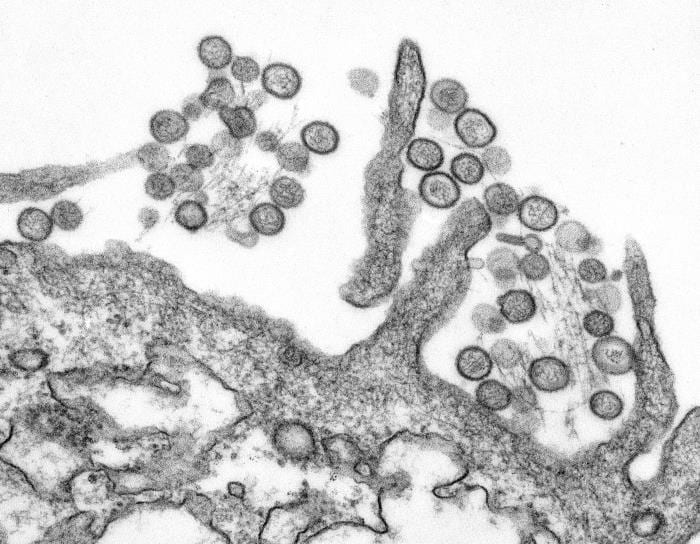
Hantavirus causes two clinical syndromes: HFRS and HPS
The CDC and CSIRO classify hantavirus disease into two clinical patterns based on which organs fail. Both syndromes share an early influenza-like phase. They diverge in severity and target organs.
Hemorrhagic fever with renal syndrome (HFRS) targets kidneys
HFRS is reported mainly in Europe and Asia. Notable HFRS strains include Hantaan virus (carried by striped field mice; CSIRO reports case fatality up to 15% in parts of Asia) and Puumala virus (carried by bank voles in Europe; CSIRO reports case fatality typically well below 1%). HFRS targets the kidneys and presents with fever, headache, back pain, abdominal pain, and in severe cases kidney failure or hemorrhage.
Hantavirus pulmonary syndrome (HPS) targets lungs
HPS is reported in the Americas. Notable HPS strains include Sin Nombre virus (United States and Canada), Andes virus (Argentina and Chile), and several others. The CDC reports HPS case fatality at approximately 38% in the United States. HPS begins like influenza and progresses quickly to fluid in the lungs, acute respiratory distress, and shock. The 2026 MV Hondius cluster is an HPS event caused by Andes virus.
Hantavirus transmission is mostly through inhaled rodent excreta
The CDC describes three hantavirus exposure pathways. Inhalation of aerosolized rodent urine, droppings, or saliva is the most common route, typically when people disturb dust in enclosed spaces with rodent activity (cabins, sheds, barns). Direct contact with contaminated material or a rodent bite are less common routes. Person-to-person hantavirus transmission has been documented for one hantavirus only: Andes virus (ANDV), and only in the setting of close, sustained contact (WHO).
Hantavirus baseline incidence: China leads with about 11,000 HFRS cases per year
Hantavirus is endemic across the Americas, Europe, and Asia. China reports the highest baseline hantavirus incidence at roughly 11,000 HFRS cases per year, followed by Russia at roughly 6,000. HPS in the Americas is reported from the United States, Canada, Mexico, Panama, Brazil, Paraguay, Bolivia, Uruguay, Argentina, and Chile. Africa has limited surveillance and limited reported hantavirus cases.
Hantavirus diagnosis uses PCR or serology by reference labs
Hantavirus infection is diagnosed by serology (IgM/IgG antibodies against hantavirus) or PCR on blood, run by national reference laboratories. South Africa's National Institute for Communicable Diseases (NICD) lab-confirmed the first 2 MV Hondius cases by PCR. The CDC notes that no specific antiviral drug is established for HPS and no vaccine is licensed for HPS in most countries. Ribavirin has shown benefit for some HFRS strains in Asia but is not established for HPS. HPS care is supportive: oxygen, fluid management, and intensive care for severe cases.
Hantavirus prevention focuses on rodent control around the home
CDC hantavirus prevention guidance focuses on rodent control: seal entry points to keep rodents out of homes, store food in rodent-proof containers, remove brush and woodpiles near buildings, and ventilate closed spaces 30 minutes before entering them. Travelers to endemic hantavirus areas should avoid sleeping or storing food in cabins or sheds with active rodent presence. The full CDC cleaning protocol for spaces with rodent droppings is on prevention.
Sources
- CDC: About Hantavirus (public domain).
- World Health Organization publications on hantavirus (CC BY-NC-SA 3.0 IGO).
- CSIRO: hantavirus explainer (May 2026).
- Wikipedia: Orthohantavirus (CC BY-SA 4.0).